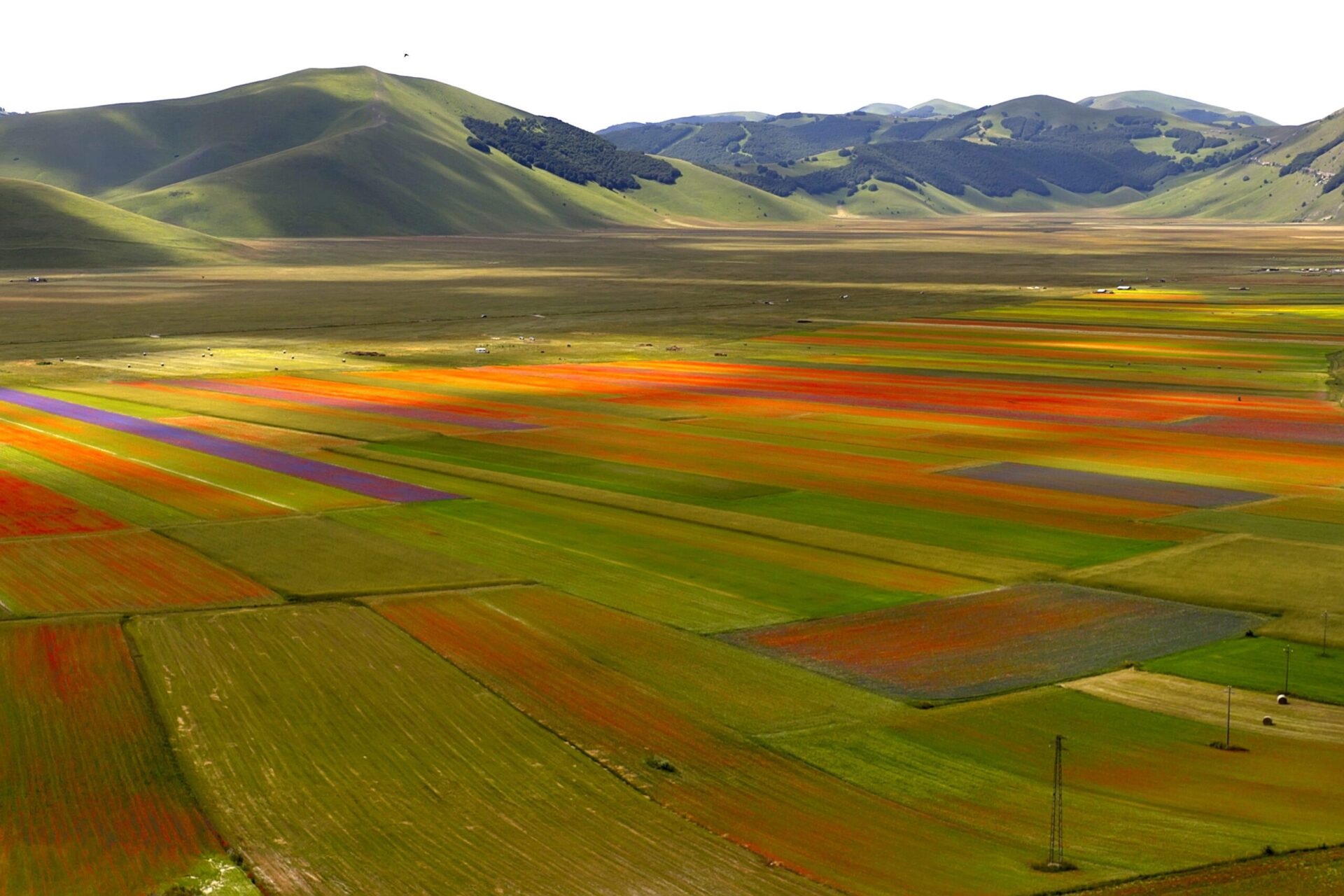
The Plain of Castelluccio di Norcia is a vast area surrounded by the Sibillini Mountains between Umbria and Marche, located at about 1350 metres above sea level. It is composed of three plains: the Pian Grande and the Pian Piccolo are in the province of Perugia, while the Pian Perduto is in the province of Macerata (in the Marche Region), for a total of 15km2 occupied.
In reality, the three uplands originate from the bottom of an ancient Apennine lake that has now disappeared. The limestone rocks of the surrounding mountainous chain, now rounded by time, are covered by green vegetation that softens the landscape.
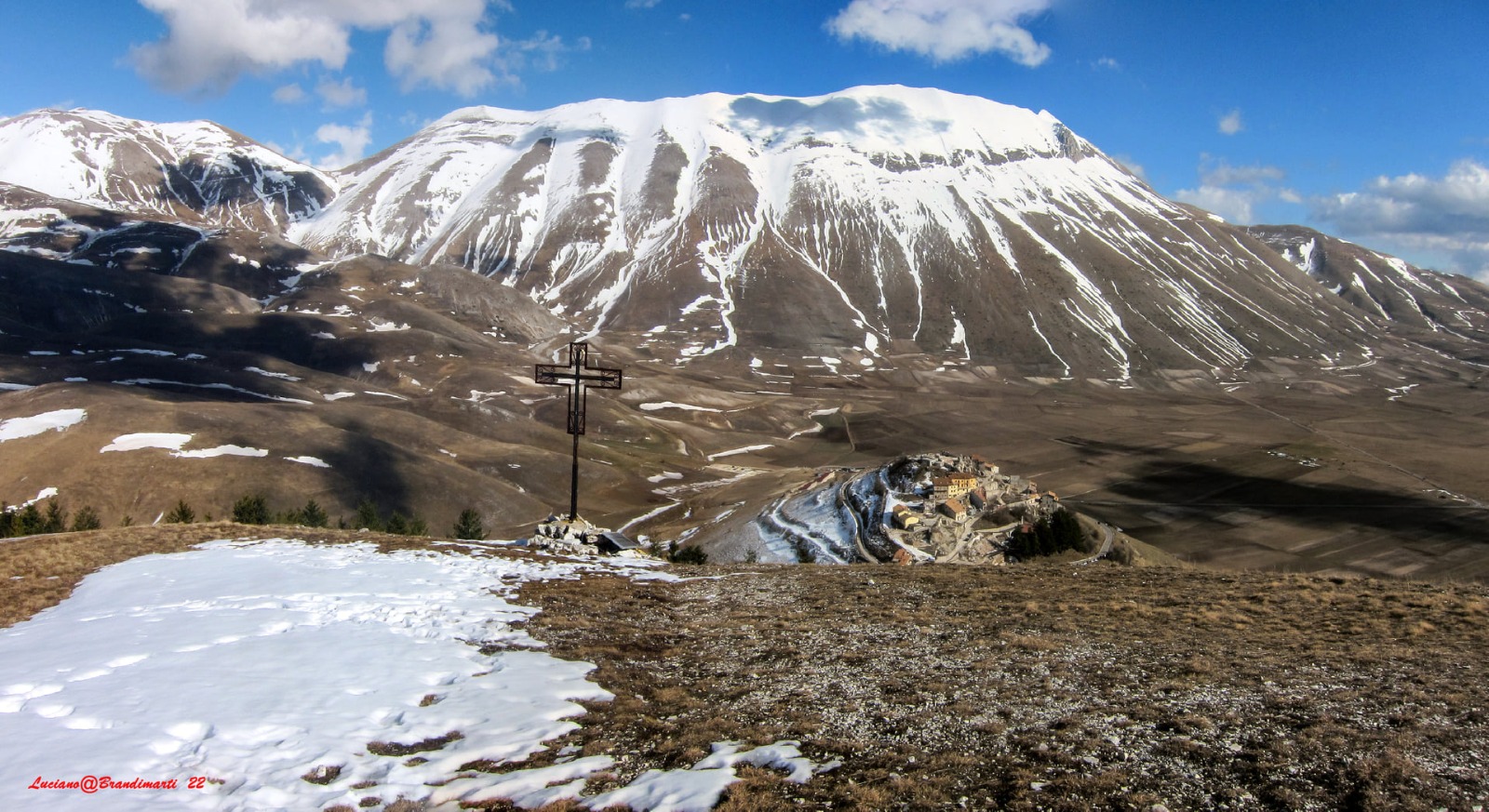
The Fosso dei Mergani and the Inghiottitura in the Pian Grande
The Pian Grande is the vastest of the three plains, as suggests its name (Grande means big), and it is the location of the Fosso dei Mergani, a karstic fissure in the ground that characterises the southernmost part of the plain. The Fosso ends at the Inghiottitoio dei Mergani, a rocky depression into the ground up to 20 metres deep, for a length of about 1.5 km. The term Mergani derives from the Latin verb mergo, which means to dive, to plunge. The water feeding the Fosso and the Inghiottitoio is mainly rainwater or derives from melting snow, giving origin to a marshy landscape surrounding the area, only to dry up almost completely during the summer months.
The Pian Piccolo and the Macchia Cavaliera
The Pian Piccolo is a small border plain linking Pian Grande with the little village of Castelluccio di Norcia. Its peculiarity is the Macchia Cavaliera, a wooded area of beech trees unaffected by the deforestation practised by man in the past.
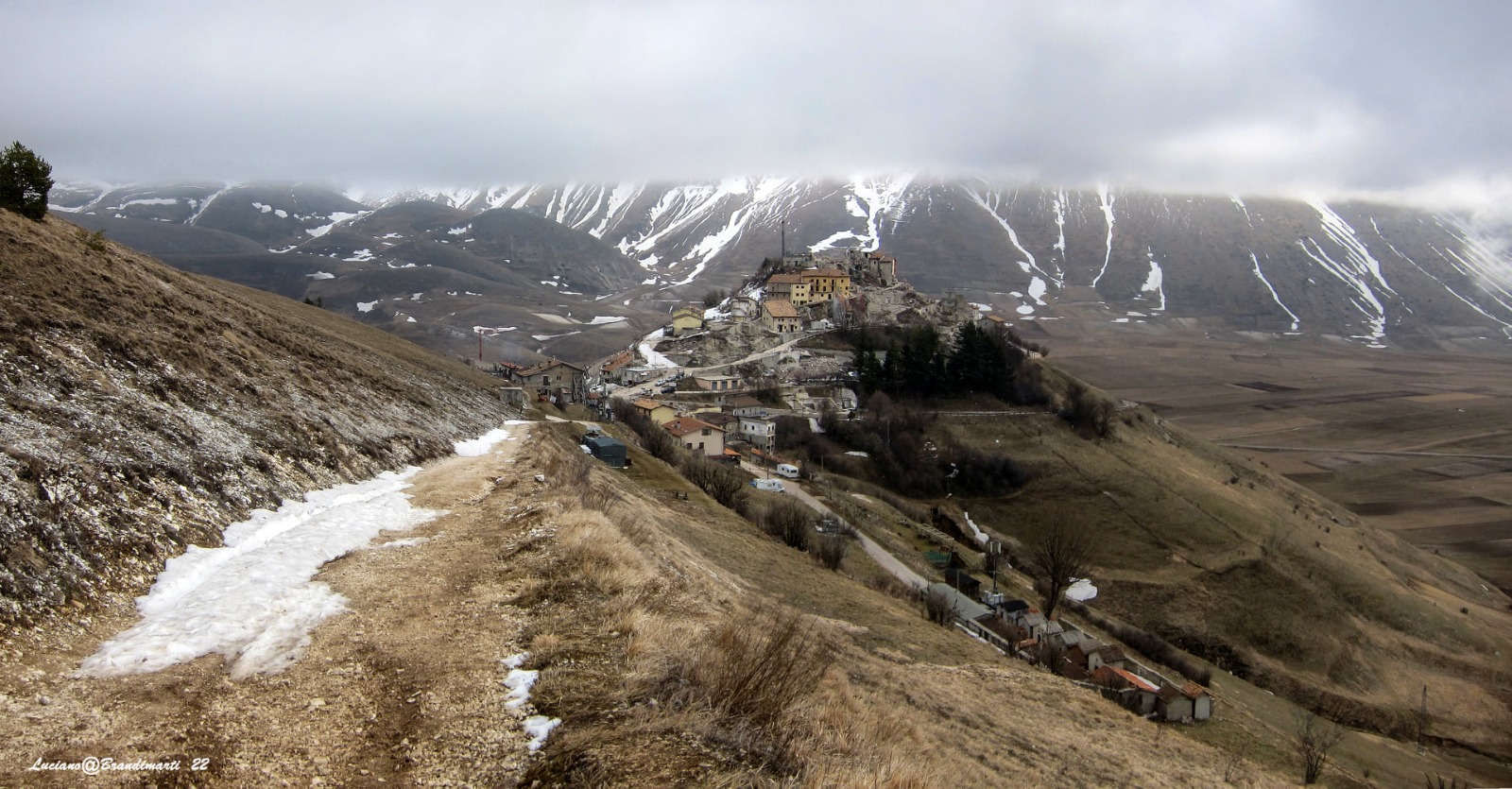
The Stagno Rosso in the Pian Perduto
Pian Perduto is the only one of the three Plains to be located in the Marche Region. It owes its name to the Battle of Pian Perduto, fought around 1522 between the armies of Visso and Norcia for control over the cultivable lands. Pian Perduto is characterised by Stagno Rosso (the Red Pond), a pond 38 to 43 metres wide and no more than 1 metre deep. The colour of the water varies from grey to yellow; however, in summer it takes a reddish colour due to the presence of euglena sanguinea. It is a green seaweed that changes colour depending on the light intensity and water temperature, giving a red-purple effect to the pond water.
The Flowering of Castelluccio
During the summer period, the Plain of Castelluccio is covered with many colourful flowers. Daisies, poppies, cornflowers, and many other flowers mingle with those produced by lentil cultivation and give origin to the natural phenomenon of Flowering (Fioritura). Throughout specially marked routes, it is possible to go trekking, horse riding or mountain biking to admire all the colour shades that fill the plain from different viewpoints. Always respecting and safeguarding the environment and the hard work of farmers who have always dedicated themselves to the cultivation of this high-quality legume that characterises this area.