Time Machine
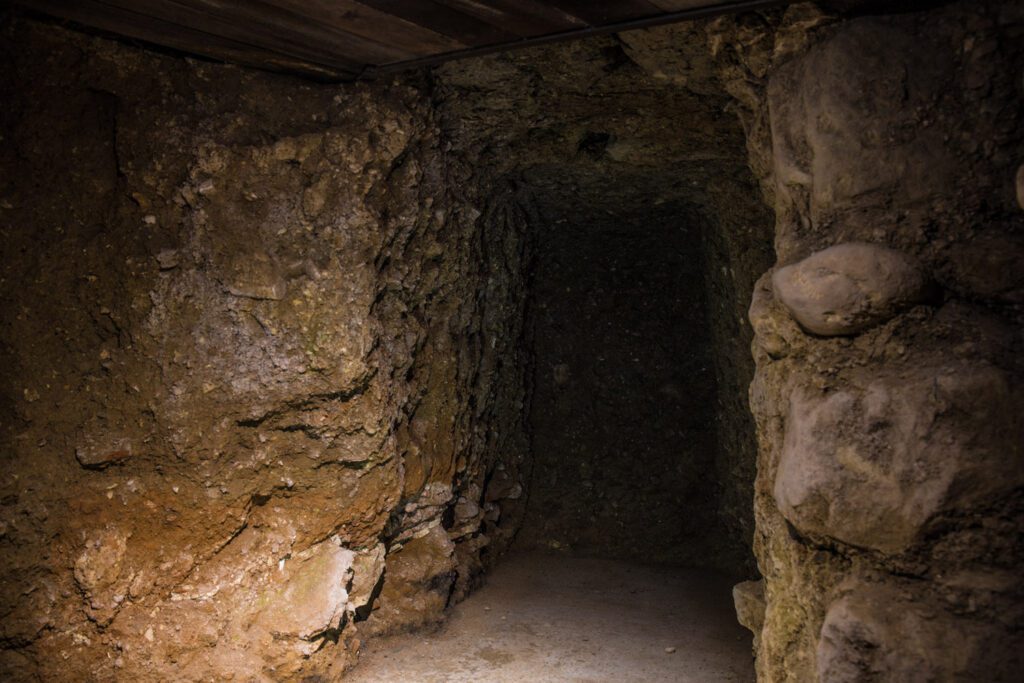
The archaeological excavations of Perugia Underground, located at the heart of the Isola San Lorenzo complex, offer the powerful sensation of a journey of discovery through the centuries. Surprising even for local residents, these spaces allow visitors to enter the very core of the hill on which the city of Perugia stands. In this way, it is possible to understand how, from the Etruscan period through the Roman era and into the Middle Ages, the city centre acquired its present-day form. The descent from the cathedral cloister to the excavations is akin to using a time machine, which gradually realigns its time with our own as we return to the surface, travelling back through the centuries.
The Acropolis
The area on which the Cathedral of Saint Lawrence and its two cloisters stand corresponds to the acropoli of the ancient city, Etruscan first, Roman later. The term “acropolis” refers to a place set higher than the rest of the city and, in the civilisations of the ancient Mediterranean, the highest point of a settlement was also the space dedicated to the divine. Etruscan Perugia is no exception: where the cathedral now stands, there was once a sacred area upon which an early temple was erected, dating to around the 6th century BC.
Over the course of twenty-five centuries, this area of the city has never changed its intended function. A visit to the archaeological excavations of Underground Perugia is therefore particularly meaningful: it allows visitors to retrace the history of Perugia from its earliest beginnings and to explore that relationship with mystery which constitutes a profound and universal aspect of human experience, from the Etruscans to the present day. Indeed, the acropolis has preserved both its position and its function down to our own time; it has never been abandoned, but has passed through phases of destruction and reconstruction that have led to its present appearance.
The Underground Walls
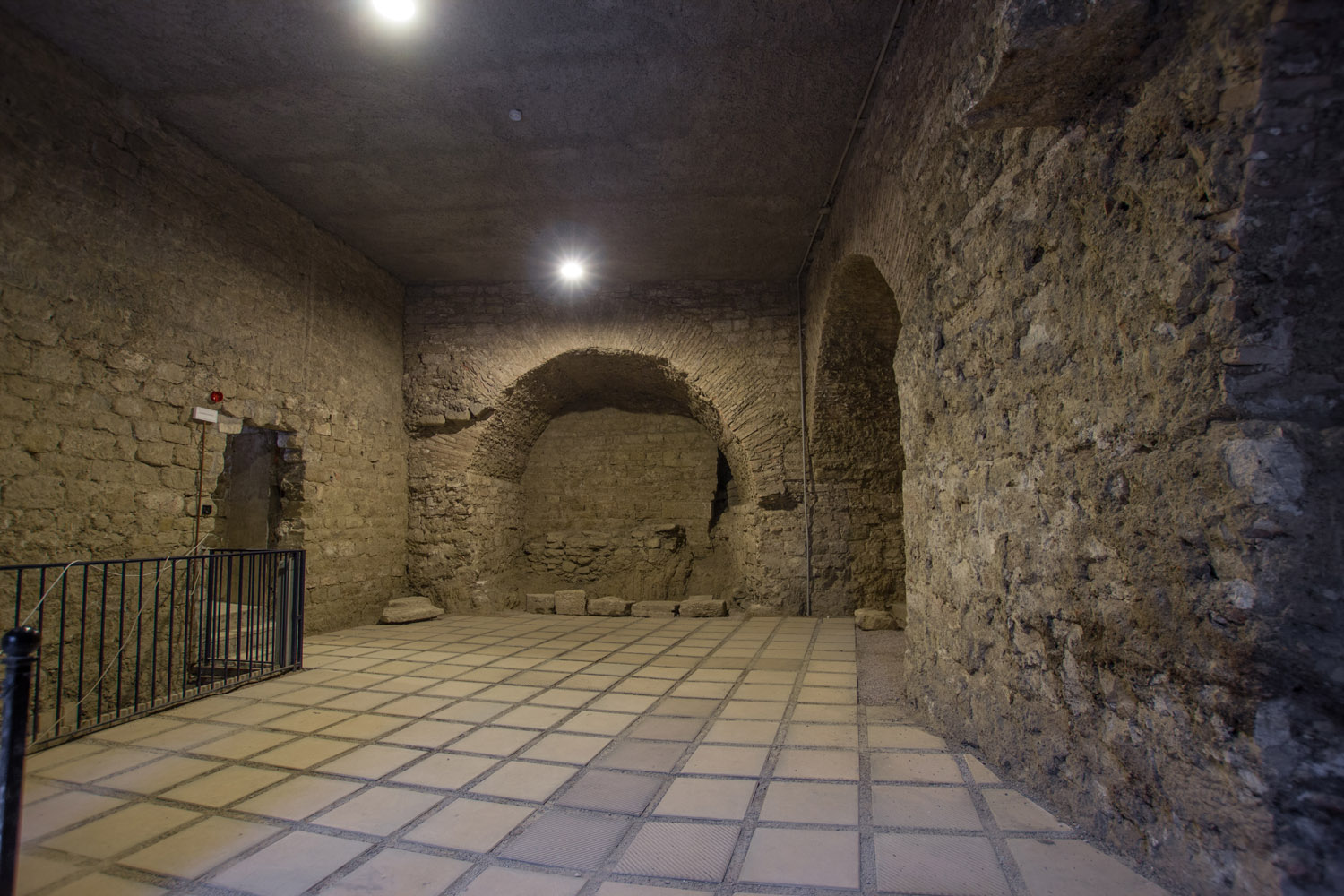
In the area corresponding to the high altar of the Cathedral, foundation walls of two temples have been identified: one dating to the 6th century BC and the other to the 2nd century BC. Above these ancient layers, archaeologists discovered the foundation wall of the medieval Cathedral, probably dating to the 12th century AD.
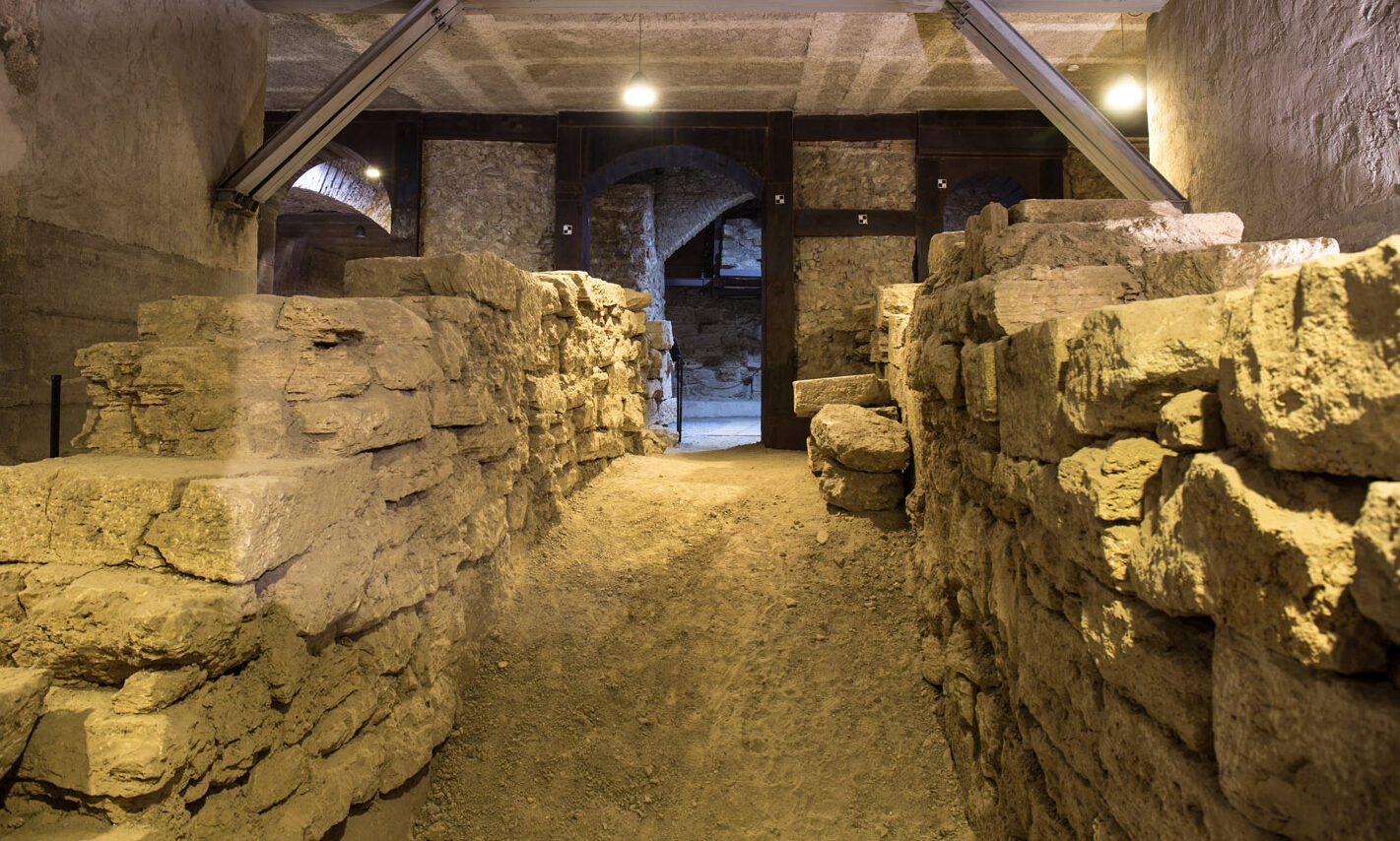
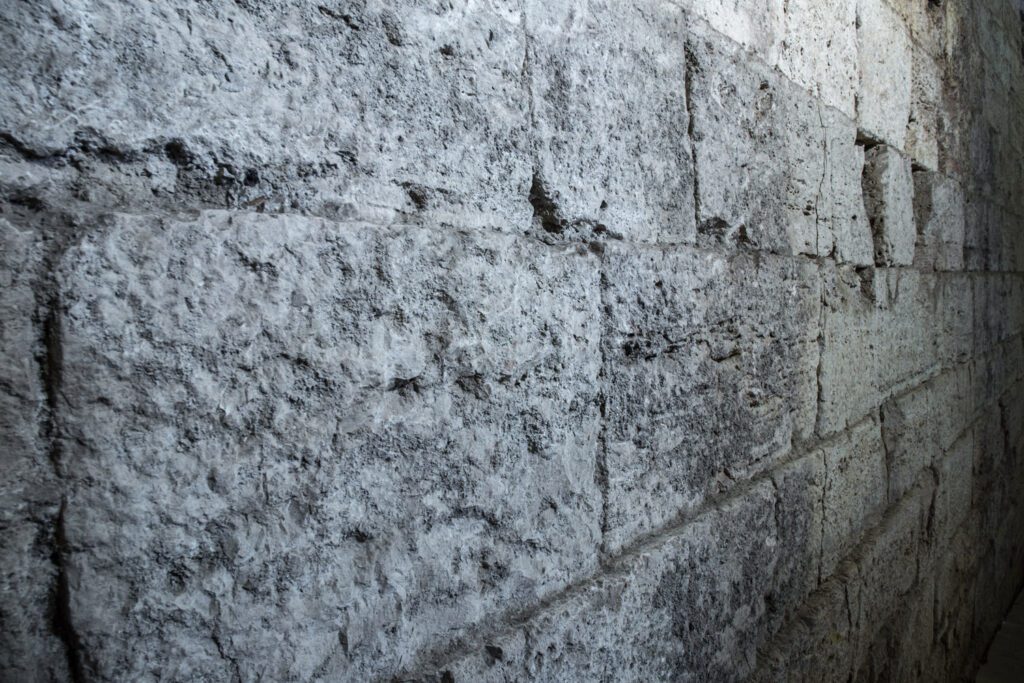
The sides of the acropolis were extremely steep and, in order to prevent landslides, imposing retaining spines were built within the hill itself. These were constructed using large, roughly squared blocks of travertine laid without mortar, that is, dry stone construction.
The Wall That Supports Perugia
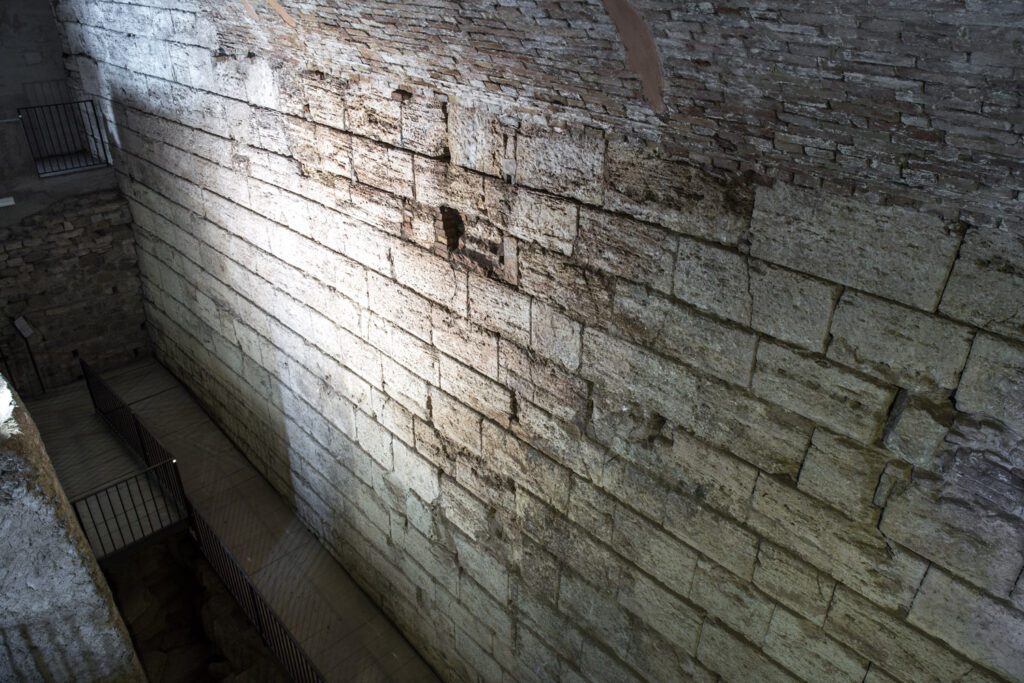
Around the 2nd century BC, the Etruscan community of Perugia constructed a series of retaining walls encircling the acropolis, serving a dual purpose: to stabilise the hill and to give it a monumental character. One of these walls, perfectly preserved, it still supports a portion of the urban space corresponding to today’s Piazza IV Novembre, the heart of the old town center. The wall, approximately fifteen metres high and forty metres long, is built of travertine. Unlike foundation structures intended to be buried, the blocks are perfectly squared and laid dry in parallel courses, each slightly set back from the one below. This construction technique gives the structure a slight inclination, enabling it to withstand effectively the lateral pressure exerted by the hill’s mass of earth. The visual impact must have been extraordinary: viewed from below, the acropolis, with its vividly decorated sacred buildings, appeared encircled by imposing walls. Beside the wall, the route of a pedestrian ramp is still discernible, which allowed people to overcome the elevation and reach the top of the hill. In the 6th century, when Perugia was threatened by the incursions of the Goti, this ramp was interrupted by the construction of a Byzantine tower, the base of which is still visible today.
The Roman Road
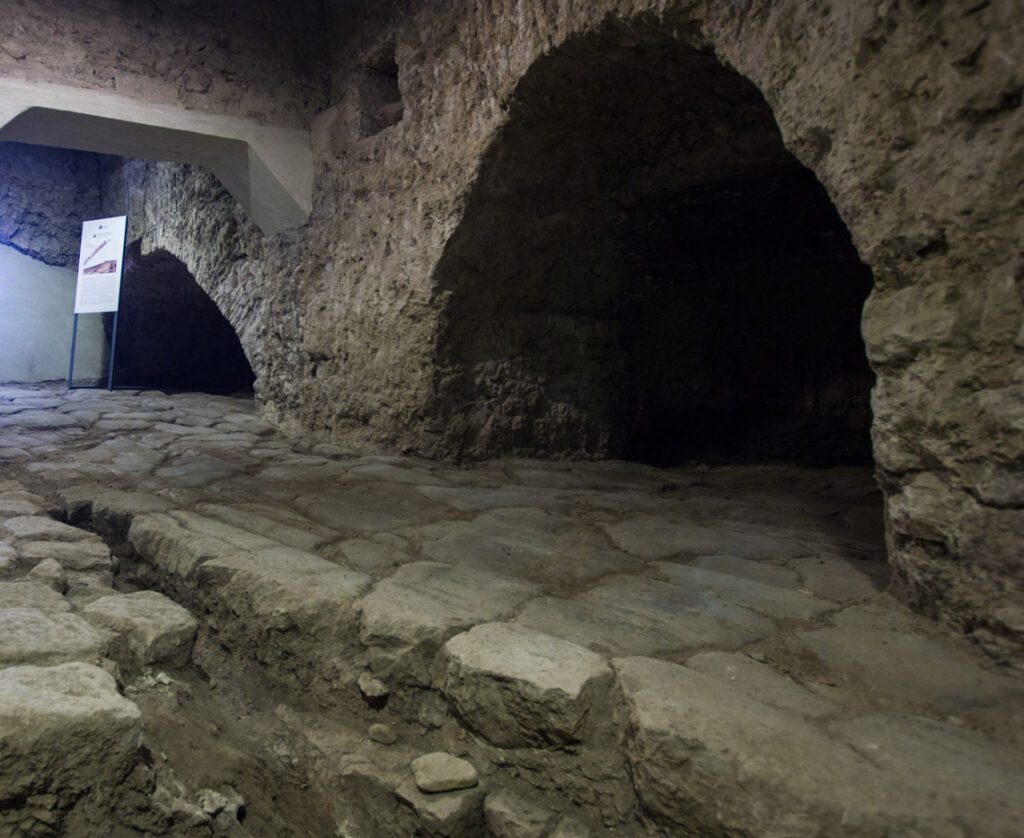
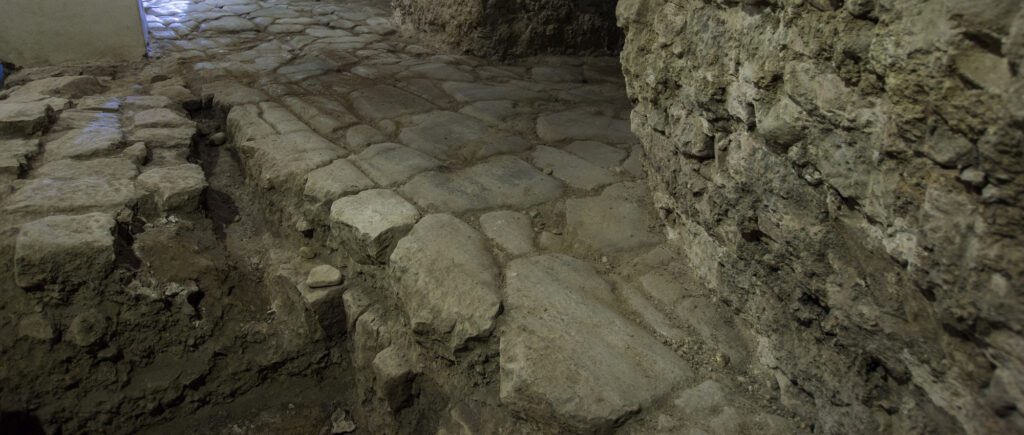
The ancient city developed around the acropolis hill, enclosed and protected by the city walls. Near the great terracing wall ran one of the main thoroughfares of the urban layout, the decumano. This road axis, still visible for a long stretch within the archaeological excavations in its Roman-era paving, still bears the marks left by passing carts. The street connected the eastern and western parts of the settlement, playing a fundamental role in the organisation of the urban space. During the Middle Ages, this thoroughfare became the foundation upon which buildings were constructed, closely linked to the Cathedral.
The Domus
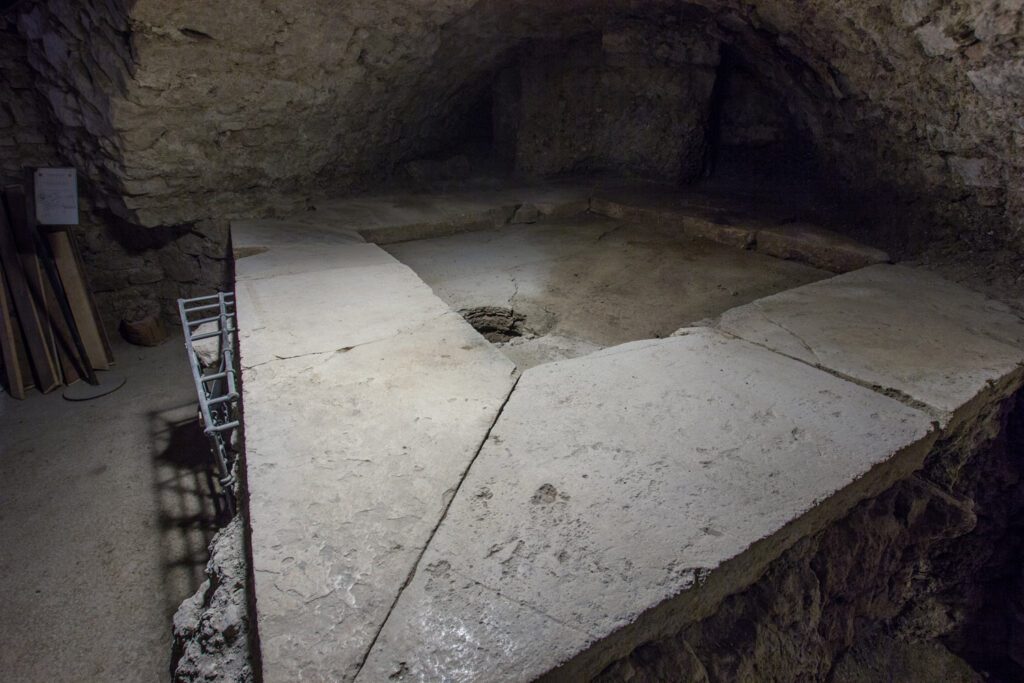
Near the decumanus, around seventy years before Christ, a domus, a private residence belonging to a high social class, was built. Parts of this building have also survived: the inner courtyard (impluvium) and the floor of one of the rooms are still recognisable. Even today, more than two thousand years later, the mark left by the fire that destroyed the city in 40 BC, shortly after it fell into the hands of the Roman army, is clearly visible. The striking black trace of soot and embers preserves the memory of a dramatic moment in Perugia’s history.